Artificial Intelligence, Artificial Future
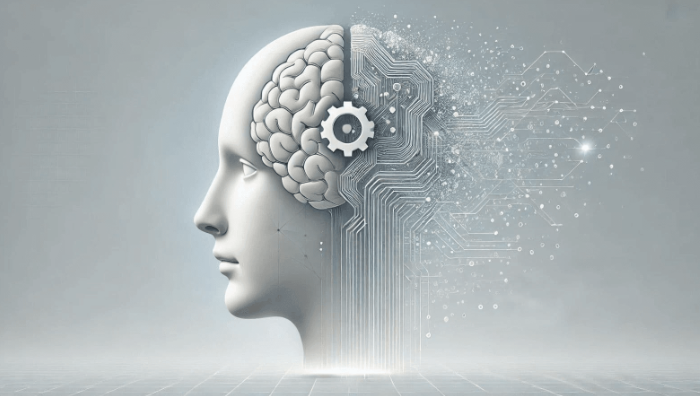
AI is one of the most common forms of technology used today, but are we considering how harmful it is for our future generations?
Someday, a child not yet born will stand on the same ground, under the same sky we see today. Will the air still be clean, the oceans alive, and the truth trusted in a world that completely relies on algorithms? That depends on us. For centuries, pioneers of our past made sacrifices to keep this world growing for a future they would never see, our present. We hold the power to shape the tomorrow in our hands. Yet, some are using it to develop new technology only to benefit themselves. AI could make our world look unrecognizable, a world where you experience everything through a screen, have personalized automation devices that think so we don’t have to, and communities full of robots doing our work for us. This tomorrow isn’t science fiction, it's a warning. The future is watching, asking what ancestors we will become.
Humans’ ability to create is being harmed by AI, and we must preserve this gift for future generations. Dr. Anastasia Berg, a philosophy professor at UC Irvine, discovered that over half of her students use AI to help write their exams. She argues how even basic AI usage puts the development of human’s critical thinking skills at risk: “For us human beings, using language is not a skill like any other — it is the way we do almost anything at all.” We use it to write about our own opinions, form arguments, and have conversations. Philosophers proved that humans cannot think or exist without language, but it’s not something we were born with. Our ancestors expanded and developed our “linguistic capabilities through immersive practice”, but relying on AI instead of thinking is harmful for developing minds. Dr. Berg adds, “without the chance to develop these capacities, young people would not be able to understand a news report, medical documents and consent forms or the merit of an argument.” Letting Chat GPT replace your “cognitive understanding” may save a lot of time and effort, but it restrains individuals’ abilities to self rule and participate in their society. Rob Smith, a superintelligence architect states, “The smartest humans on earth have inadvertently released a monster they no longer control into a world [full of] violence, greed, corruption, war, disparity, competition and the overriding will and goal to survive above all else.” Young students especially develop knowledge and critical thinking skills through practice, but constantly relying on AI could lead to permanent damage on growing minds.
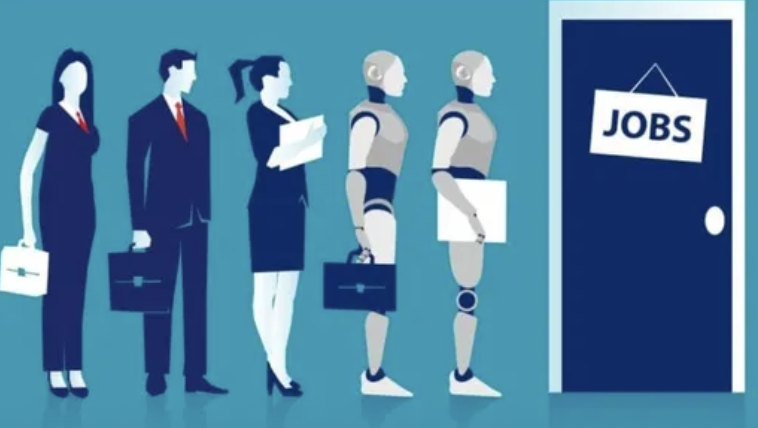
AI is a short-term band-aid for our issues, but to benefit future generations, we need to focus on finding long term solutions. A recent MIT study discovered that 11.7% of U.S. workers are vulnerable to being replaced by AI. CNBC news states that a simulation tool called the Iceberg Index was used to conduct the study. This tool mimics interactions and offers a view to the public on how AI can reshape and potentially replace numerous jobs across the country. Mackenzie Sigalos writes, “The index treats the 151 million workers as individual agents, each tagged with skills, tasks, occupation and location. It maps more than 32,000 skills across 923 occupations in 3,000 counties.” The layoffs and role shifts in technology are just the “visible tip of the iceberg”. The total exposure comes to $1.2 trillion in wages. Although the index is not an exact source to show where and what jobs will be lost, it gives the world a “snapshot” of what today’s AI systems can already do. AI gives automatic short term gains that satisfy immediate needs, but puts the future of humanity in jeopardy. What started as a helpful tool for students is now replacing jobs and potentially harming our economy.
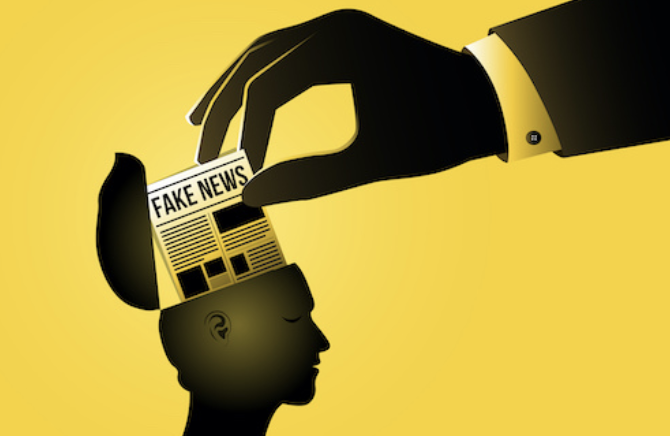
Future generations will differ from our past, but their growing access to advanced technology also exposes them to the dangers of AI-driven misinformation. AI has mostly been used for automating information, but political figures are now using it as propaganda too. President Trump has posted numerous fake AI images as propaganda on social media, spreading misinformation. “The truth no longer matters, all you have to do is go viral," adds Stuart A. Thompson. AI generated images show Trump cosplaying as the pope, standing on top of a mountain after conquering Canada, and flying a jet over protesters in the city, dumping excrement. These fake images are a unique way to attack rivals and celebrate his own legacy in an easy and engaging way. Henry Ajder runs an AI consultancy and says, “It’s designed to go viral, it’s clearly fake, it’s got this absurdist kind of tone to it.” Clearly, this generation’s use of technology has rapidly evolved, allowing political leaders to produce fake images and videos. The worst part is, it only takes a few clicks to generate these fake videos. AI users can now utilize lip manipulations, clone voices, and face swap the subject in minutes. Soon enough, future generations will have difficulty telling the truth from the lies of our most powerful leaders. We need to guide our rapidly advancing technology towards progress, not chaos.
What kind of world are we preparing for our future generations? Goldman Sachs estimates that AI could replace the equivalent of 300 million full-time jobs globally. Reports show that around 87-92% of U.S. students rely on AI for schoolwork according to the Boston Brand Research & Media. And the NewsGuard states that around 2,089 AI websites are operating with very minimal to no human monitoring, producing false information constantly. “The development of full artificial intelligence could spell the end of the human race,” Stephen Hawking said to the BBC in his warning of AI. For generations, mankind has developed language, reasoning, and creativity. But every time we choose quick solutions over long term responsibilities, the more we create long term problems, like AI. For now it’s an issue we can fix, but if we fail to act soon, the future of our society could become prey to our own technology that we couldn’t control.
Works Cited
Berg, Anastasia. “Why Even Basic A.I. Use Is So Bad for Students.” The New York Times, https://www.nytimes.com/2025/10/29/opinion/ai-students-thinking-school-reading.html?unlocked_article_code=1.2U8.LbkE.cI2xLxWZcY9H&smid=url-share.
Mittelstadt, Brent. Wachter, Sandra. “No Need To Wait for the Future, the Danger of AI Is Already Here.” University of Oxford, https://www.ox.ac.uk/news/2023-05-15-expert-comment-no-need-wait-future-danger-ai-already-here.
Perna, Mark. “The Why Generation and Why You Should Care.” markcperna, https://markcperna.com/why-generation-why-you-should-care/.
Sigalos, Mackenzie. “MIT study finds AI can already replace 11.7% of U.S. workforce.” CNBC News, https://www.cnbc.com/2025/11/26/mit-study-finds-ai-can-already-replace-11point7percent-of-us-workforce.html.
Thompson, Stuart. “How President Trump uses AI.” The New York Times, https://www.nytimes.com/2025/10/22/briefing/how-president-trump-uses-ai.html?unlocked_article_code=1.vU8.2wYi.Af5A8JwOTHo5&smid=url-share.
“Three Surprising Benefits of Considering Future Generations.” SOIF, https://soif.org.uk/blog/three-surprising-benefits-of-considering-future-generations/.
“Youth and Future Generations.” Beyond Lab, https://www.thebeyondlab.org/website-com-focus-area-page/future-generations#:~:text=The%20decisions%20and%20actions%20of,to%20those%20yet%20to%20come.