The Man Who Dared to Fight Windmills
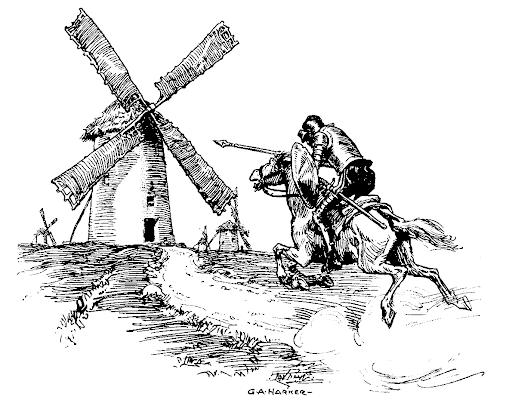
Don Quixote is well regarded as the first modern novel and the first international bestseller. The main character, Alonso Quixano, inspires so many people to believe in themselves.
Some heroes live in history books, and some heroes live in international bestsellers. My hero rides into the Spanish hills, righting all wrongs and bringing much joy and ecstasy to the people around him. Many people feel inspired by athletes, musicians, and businessmen. I feel inspired by an ordinary man who accomplished extraordinary things. He is Alonso Quixano, known to the world as Don Quixote.
What inspires me most about Don Quixote is not that he always succeeds, but that he refuses to stop trying. Armed with little more than old armor and a skinny horse he sets out into the world convinced he is a valiant knight. Of course, reality is otherwise and he looks to be delusional. One famous example is when he charges at the windmills, believing them to be monstrous giants. To everyone else, it is obvious he is attacking farm equipment, but to Don Quixote it is a true battle between good and evil. Instead of being embarrassed when he gets knocked down, he simply explains that a wicked enchanter must have turned the giants into windmills at the last second. In other words, he refuses to let reality ruin a perfectly good adventure. I am inspired by how strongly Don Quixote believes in bravery, justice, and honor that he tries to live by those values no matter what happens to him. Even when he is beaten, laughed at, or tricked by people who understand the world better than he does, he continues riding forward with confidence. It takes a lot of gut to stay authentic even when you are laughed at. This is something I will always respect and admire. He is someone determined to make the world a better place, even if the world refuses to cooperate. And honestly, if a man can get thrown off a horse, attacked by windmills, and still wake up the next morning ready to save the world again, I can do my homework on time.
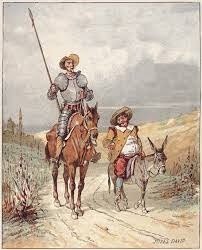
Another reason why I am inspired by Don Quixote is the way he connects with the people around him, such as his squire, Sancho Panza. At the beginning, Sancho follows Don Quixote mostly because he is promised land to govern, which tells us that Don Quixote connected with his desires and understands what Sancho wants. Sancho often sees the world clearly and tries to warn his friend when danger approaches, yet he continues traveling beside him anyway. Don Quixote can make connections even with differences. Don Quixote talks in monologues about honor and destiny, while Sancho answers with common sense. Yet the two become friends despite their differences. Sancho, a logical man, sees the logic behind why Don Quixote is so inspiring. Don Quixote as we discussed above, consistently defends strangers and corrects injustices. Don Quixote is inspiring because he can show his vision to other people. He shows Sancho that people do not have to be perfect to make a difference. It takes a lot of wisdom and skill to teach someone a lesson as important as this. Especially to a man like Sancho. He also teaches Sancho how to tolerate hardship, such as when they get robbed by thieves, who were let out by the knight of the sorrowful face.
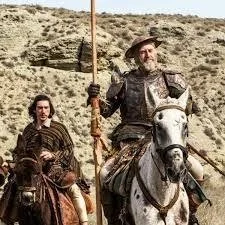
Another reason why everyone should be inspired by the great Don Quixote is that he truly believes in himself. Self-love and self-belief are some of the most important things needed to live a happy and successful life. Confidence allows people to keep moving forward even when circumstances say they should quit, and Don Quixote demonstrates this better than almost anyone. Self-love is crucial for a balanced, fulfilling life, acting as the foundation for mental health, resilience, and healthy relationships. Don Quixote, being the genius he is, seems to understand this nearly 250 years before psychology was formally studied. Only a few people can be considered ahead of their time, but being a quarter of a millennium ahead is honestly outrageous. He practices psychology before psychology even exists, and he shows this through his unshakable belief in his own purpose. No matter how many times he is knocked down, mocked, or proven wrong, he never abandons the identity he has chosen for himself. Instead of letting failure define him, he simply rewrites the story so that the adventure can continue. When others see a confused old man, Don Quixote sees a knight destined for greatness, and that perspective gives him courage that most people wish they had. While his confidence often leads him into trouble, it also protects him from doubt and despair, allowing him to live boldly rather than cautiously. In a world where many people hesitate because they fear embarrassment or failure, Don Quixote charges forward without hesitation, reminding us that sometimes believing in yourself, even a little too much, is far better than never believing at all. Another fantastic trait we can take from the Don.
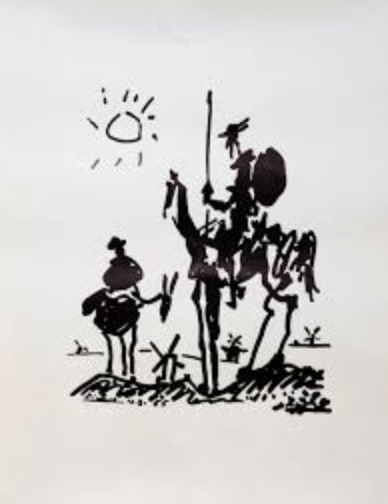
Some people say that Don Quixote should not be admired because he is delusional and often misunderstands reality, but this overlooks the true genius of his mind. Sometimes Don Quixote’s genius is too much for the common man to understand. While it is true that Don Quixote mistakes windmills for giants and ordinary inns for castles, judging him only by his mistakes is not a good way to judge his character. Don Quixote’s actions are guided by values such as courage, justice, and compassion, qualities that many of the supposedly “sane” characters lack. Throughout the novel up to Chapter 34, Don Quixote consistently attempts to help others, defend the weak, and live according to a moral code of chivalry, even when doing so brings him personal suffering. His mistakes come from a commitment to his ideals. Should we not hold our ideals to the highest standard? Should we not hold on to our beliefs even in the face of death? Are those who hold on to their ideals not hailed as martyrs? In contrast, many realistic characters act out of greed, convenience, or cruelty, proving that “sanity” does not mean that they have good virtues. We should not judge people based on their mistakes or sanity but by their character and values. Martin Luther King, Jr. once said, “I have a dream that my four little children will one day live in a nation where they will not be judged by the color of their skin but by the content of their character.” Don Quixote tries to do the right thing no matter what, and that is what is important. We should judge people by their character. Sometimes, when people are doing the wrong thing, we stand up to them because of our values and speak up. This is what Don Quixote is doing. He is standing up to the unjust justice system and the lack of imagination and joy. By leading by example and allowing himself to be laughed at, he paves the way for everyone to have a little joy and imagination in their lives.
In the end, Don Quixote may not look like a traditional hero, but that is exactly why he is so inspiring. While others admire strength, fame, or success, Don Quixote shows that true greatness comes from self belief, courage, and not being afraid of being yourself. Throughout his adventures, he refuses to give up on himself, inspires those around him, and challenges a world that has no imagination. Even when he fails, his intentions remain honorable. His story reminds us that imagination and confidence are not weaknesses; they are what give life meaning and direction. By believing in a better, more heroic world, Don Quixote encourages readers to look beyond ordinary limits and pursue their own purpose with the same determination. Some may laugh at him but his courage and optimism overcome their jealous laughter. Don Quixote tells us to be bold, hopeful, and unapologetically ourselves, and that is the greatest lesson in life.