Tonogenesis and Its Impacts Today
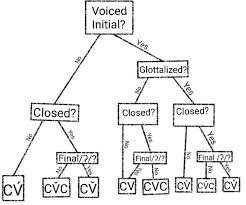
Languages are always changing, but soon enough, not only will language learning be super difficult, but almost every language could become tonal and difficult to understand.
What exactly is tonogenesis? Well according to most linguists, tonogenesis is a process that all languages go through, and as a result, many languages are undergoing major phonetic changes. Essentially, tonogenesis is the process by which languages phonetically change when consonants begin to sound very similar and essentially create phonetic homonyms and consonant harmony.
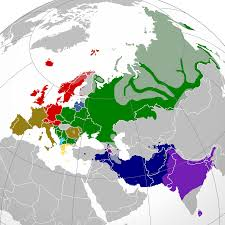
This process is already well noticed globally, but even more heavily noticeable in African languages (such as in the Niger-Congo language family). For example, older generations may pronounce the /b/ and /p/ sounds differently, but from tonogenesis, the new generations make these sounds essentially identical, with the only difference being the stress and location at which the sound is produced. Similarly, in Vietnamese (an Austroasiatic language), three major tones were present in the Old Vietnamese language, but with time and evolution, there are only two major tones.
Due to the impact that tonogenesis can cause, language learning is extremely confusing as generations become unable to communicate with each other. However, this natural process will continue to shape and mold most (if not all) languages and phonetics as we know them, causing major IPA modifications (International Phonetic Alphabet) and the creation of new languages as we know them in the near and far future.
Tonogenesis has strongly influenced a lot of major languages, and not just simply, but in highly complex ways. I’ve personally watched and studied as languages from the past become completely unintelligible after a few decades of influence. And from tonogenesis, languages which were originally consonant-driven are becoming homogenous and foreign as it molds into a harmony of consonants and vowels spoken in instants. Sounds like /b/, and /p/, or /k/, /c/, and /q/ have become remarkably similar and notorious for learners as they have become indistinguishable to foreign ears. This makes it extraordinarily difficult for language learners, myself included, to be able to understand and comprehend languages.
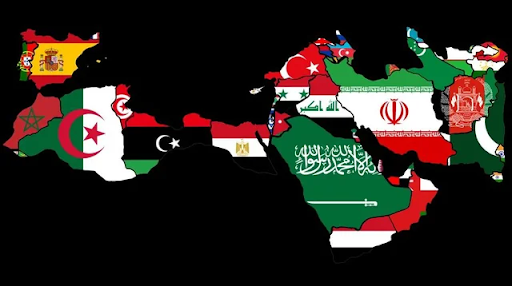
Even worse, while these phonetic changes are occurring left and right, textually, they all remain the same, causing substantial amounts of confusion for all types of learners. Another example of tonogenesis would be with the Spanish word “Jabon” (meaning soap). Contrary to other Indo-European languages, which pronounce the word “soap” with an S (such as Soap in English, såpe in Norwegian, etc), Spanish is different as it was under Arab control during the Arab conquests centuries ago. In this, the Arabs had to learn to approximate the original Spanish “s” as it was too far back to be a hissing sound (/s/ or known as an “Alveolar Fricative” according to the IPA) and too far forward to be a /sh/ sound (known as a “Postalveolar Fricative”). As a result, the Spanish S has evolved into a /ç/, /x/, and eventually, the /j/ sound as we know it. This has caused great confusion for many new learners of the Spanish language, and the same will happen with every other language as well. Personally, this is an issue that we wish to end, but because of how widespread and influential it is, it can never be stopped.