Learning to Listen
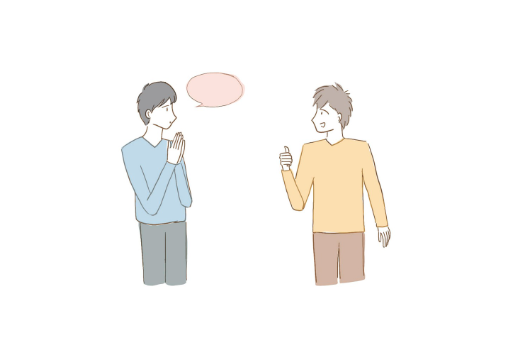
Growing healthy connections starts when we stop trying to control the conversation and choose to listen to the person in front of us.
“It doesn’t make sense. Why would he say—” my friend began.
“Well, he isn’t being a good friend, so you should just move on. Why do you even care anymore?” I cut in.
“Okay, Michael.”
For most of my life, I believed being a good friend meant having answers. When someone came to me with a problem, I treated it like a puzzle that needed solving. I jumped in with advice before they could finish their sentences.
“Like, you should just stop hanging out with him, especially if he hurts you—”
“Okay, Michael.”
I offered solutions, pointed out silver linings, and laid out “better” options.
“Or if you really want to stay friends, you should just talk to him one-on-”
“OKAY, Michael. I got it.”
Fixing things felt productive, and productivity felt like care. Looking back, I realize I wasn’t just trying to help them, but to control their struggle and their problem. I overwhelmed them by not letting them speak, by not being able to listen.
And yet, my friend had this strength. One afternoon, on the kind of day when my thoughts felt heavier than I could carry, I reached my limit. Everything irritated me. A test I had dreaded. Homework I hadn’t expected. Plans canceled at the last minute. The small things piled up until they felt enormous.
We started talking, and eventually I unloaded everything that had gone wrong that day. I spoke quickly, stacking frustrations on top of each other, waiting for the moment he would interrupt. I expected him to jump in with his thoughts, his advice, or at least some attempt to fix what I was feeling. But he didn’t. Every time I paused, expecting him to speak, he stayed silent. At first, it felt strange. Almost uncomfortable. Yet somehow, he was still very much a part of the conversation. He nodded when I spoke. He kept his eyes on me instead of his phone. He stayed present. His silence didn’t feel dismissive or disinterested.
I contemplated that moment over the following weeks. I thought that building connections stemmed from the ability to speak and be interesting. If I were a good speaker and always had something to say, then I would be liked and understood by others. Yet my friend said nothing, and he had no trouble communicating, connecting, and being understood.
I concluded that when we listen, we embrace the other person's words and tell them, “Hey, I value you and your thoughts.” Being able to listen builds trust and allows connections to form in ways words never could. Growing healthy connections starts when we stop trying to control the conversation and choose to listen to the person in front of us. The next time that same friend had a hard day, I didn’t rush in with answers. I didn’t search for solutions. I just sat beside him and listened, and for the first time, my silence meant everything.