The Overthrow of the Syrian Government
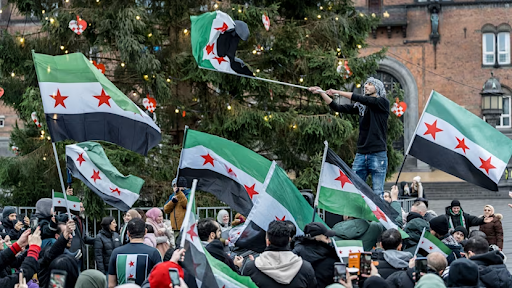
In Syria, the rebels overthrow the regime of Assad and reinstate control.
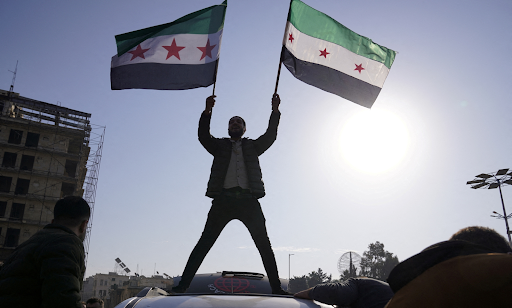
In the article “Why does Syria have a 'new' flag and what does it mean?”, Olivia Mustafa states the people of Syria have long attempted to overthrow the government, aiming to end what many international observers describe as a brutal regime under Bashar Al Assad while replacing it with an older flag, symbols, and leaders. In the process, rebel groups gained control of certain regions and reintroduced the older green, white, and black tricolor flag with three red stars, which began appearing on government buildings, people's faces, and even bridges in those areas. Many Syrians, already exhausted by the decade-long civil war, have seen the impact of the new rebel leaders and their old green white and black tricolor flag with three red stars put up everywhere from government buildings, faces, and even bridges.
Historically, the flag was frequently changed to represent political shifts, such as when they gained independence from the Ottoman Empire in 1918. Later, it was changed to the red, white, and black stripes with the double green stars to show their union with Egypt. The colors represent the pan-Arab movement with all Arab nations and their Islamic significance. But throughout Syria’s modern history, frequent political changes and ongoing regional conflicts have contributed to long-term instability, which may last permanently, according to some critics.
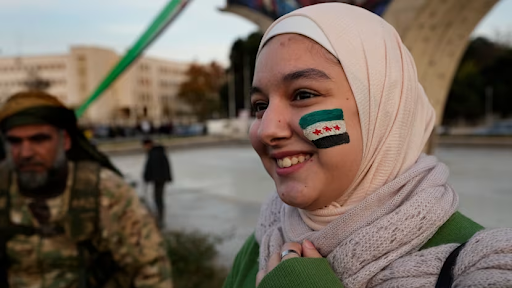
The rise of rebel groups and the return of Syria’s old tricolor flag was something many anticipated. After years of living under a harsh, brutal, and undeniably oppressive regime filled with censorship, violence, and unimaginable suffering, it makes sense that people would take to the streets, create mass riots, and even risk everything to overthrow the dictatorship. I feel a real sense of pride and inspiration watching people come together, all in the name of standing up for freedom, representation, and dignity, which every human rightfully deserves.
The pan-Arab colors, such as green for lush endless fields, white in the acts of peace, black representing the heavy tolls of prolonged battles, and red in the bloodshed of swords and guns alike engraved into time, all carry deep, powerful meaning, tying the Arab nation’s struggles into a shared history and identity across the vast region.
But even as these changes happen and violence still erupts, I can’t help but feel the weight of all the pain, suffering, and frustration that’s been built up over the years. At the same time, I remain worried. Syria’s history is full of shattered promises and endless conflicts, which brings me back to an endless question: can these new leaders truly break the historically bound cycle, or are we just seeing another round of a long, painful struggle for eternal justice for all?
Alshamary, Marsin. “The Assad regime falls. What happens now?” Brookings, https://www.brookings.edu/articles/the-assad-regime-falls-what-happens-now/.
Al-Abi, Rizik. “Bashar al-Assad has fallen: now I must continue writing.” Index on Censorship,https://www.indexoncensorship.org/2025/01/bashar-al-assad-downfall-syria-journalism-exiled/
Mustafa, Olivia. “Why does Syria have a 'new' flag and what does it mean?” ITV news, https://www.itv.com/news/2024-12-13/why-does-syria-have-a-new-flag-and-what-does-it-mean.